Lyophilized Peptide Storage: Temperature Level, Moisture, & Light
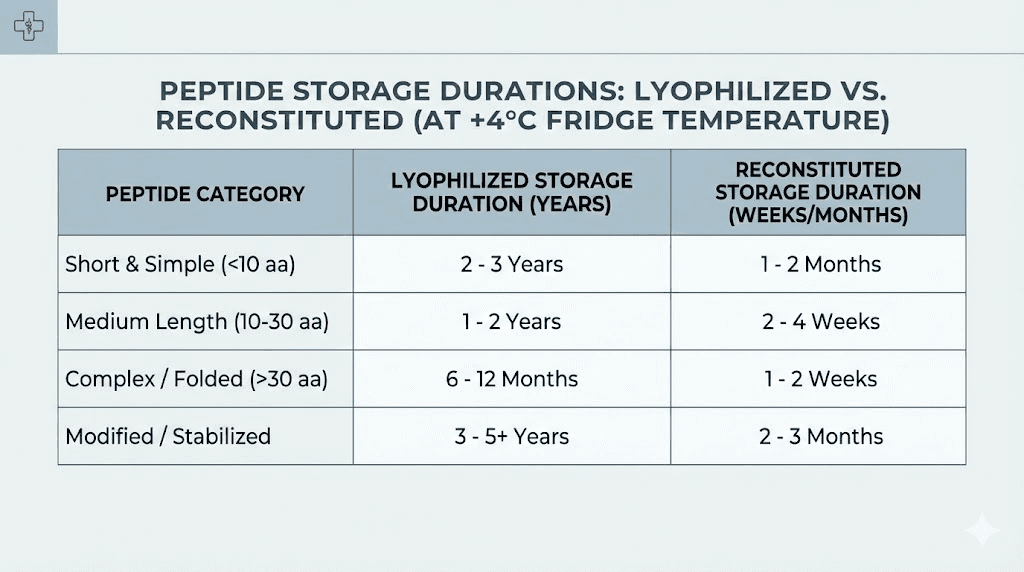
The Peptide Stability Myth: What 50,000+ Lab Tests Disclose Concerning Storage, Dealing With, And High Quality The advice most likely originated from protein biologics (like monoclonal antibodies), where aggressive frustration can trigger aggregation and denaturation. Yet the majority of study peptides are a lot smaller sized molecules without complicated tertiary frameworks to interrupt. This section accumulates any information citations, information availability statements, or supplementary products consisted of in this post. According to Verified Peptides, using airtight, inert-gas-flushed glass or dark containers with desiccants dramatically mitigates moisture and oxidative risks. The shelf life of peptide powder depends upon the storage conditions. As a whole, lyophilized peptide powder can be stored at -20 ° C for concerning 1 year and at -80 ° C for concerning 3 years. Return reconstituted peptides to chilled storage promptly after use. Don't leave vials resting at room temperature level while you address other jobs. Bacterial growth speeds up substantially at warm temperatures. The vial itself matters more than a lot of scientists appreciate. Conventional study vials hold 2-3 milliliters, with the 3mL borosilicate glass vial being the market criterion for peptide compounds. The size provides enough headspace for correct reconstitution while maintaining the powder cake accessible near the bottom.
Innovative Considerations For Knowledgeable Researchers
Dipeptides, tripeptides, and other brief peptides are generally manufactured in the solution called Liquid Phase Synthesis. LifeTein provides Cys including peptides as monomers unless specified otherwise. As air oxidation can not be completely avoided, decreasing the peptide prior to use by therapy with dithiothreitol (DTT) might be valuable to your experiment. Peptides that contain cysteine, methionine, or tryptophan are sensitive to oxidation. The peptides including Trp, Met, or Cys deposits need special care to prevent oxidation. The solubility of a peptide is primarily depending on the physical residential properties of its amino acids. The D-enantiomer and the racemate are designated by -D- and -DL-, respectively. The amyloid peptide Aβ (1-42), or various other amyloid mutants may develop insoluble accumulations throughout the storage space. The benzyl alcohol concentration positions no toxicity issues at the quantities involved in peptide research study. Inside that vial, the lyophilized peptide creates a characteristic "cake" or "plug" of material. A well-manufactured peptide cake appears white to beige, cosy, and uniform. Some peptides form loosened powder rather than a solid cake. What matters is consistency and the absence of staining.- Providers that can not or won't offer logical information ought to be stayed clear of.
- However, upon invoice, store the sealed vial in a-- 20 ° C or-- 80 ° C freezer till usage
- This is especially damaging for hydrophobic peptides and long series.
- As soon as a peptide vial has been pierced (opened up for use), it must be kept in the refrigerator and used within the duration specified by the manufacturer, typically varying from 4 weeks to a couple of months.
What negates peptides?
Salicylic acid''s exfoliating action may undercut the peptides, diminishing their skin-repairing advantages. Suggestion: To prevent any interaction, use salicylic acid and peptide items at various times. For instance, include salicylic acid in your early morning routine and peptides in your evening routine.
Sterile Water
All peptides gone over are planned for research functions only and are not for human consumption. Peptides are very vulnerable to the damaging effects of light direct exposure, especially ultraviolet (UV) radiation, high as vampires hesitate of sunshine. Trusted by biotech leaders worldwide for over 45+ years of delivering premium quality, quickly and scalable synthetic biology remedies. A stronger solvent used for hydrophobic or hard to dissolve peptides. Utilized for harder or hydrophobic peptides to enhance solubility. Some solvent systems incorporate bacteriostatic water with 0.9 percent salt chloride, supplying both preservative and saline elements. This means that keeping reduced and continuous humidity is necessary for lasting stability. Inappropriate storage space-- such as direct exposure to warmth, moisture, or light-- can lead to oxidation, deamidation, or gathering, ultimately compromising peptide security and task [1] For scientists and providers alike, proper peptide storage space is important to protect strength and make certain reproducibility in experiments or restorative use. Lyophilized peptides are very delicate molecules whose integrity depends on accurate storage conditions. While freeze-drying extends life span by getting rid of water, peptides stay chemically and literally prone. Appropriate storage space is essential for keeping peptide stability and ensuring reliable research study outcomes.